In today's hyper-competitive digital landscape, where choices abound and attention spans are fleeting, the success of a product or service often hinges on a single, critical factor: User Experience (UX) Design. More than just aesthetics or usability, UX design is the profound practice of crafting interactions that are not only functional and efficient but also meaningful and delightful. It's the invisible hand guiding users seamlessly towards their goals, the thoughtful consideration that anticipates needs, and ultimately, the engine that fuels both groundbreaking innovation and unwavering user engagement. As we navigate an increasingly sophisticated technological world in 2025, understanding and implementing exceptional UX design is no longer a luxury but a fundamental imperative for survival and growth.
Deconstructing User Experience: More Than Just a Pretty Interface
User Experience, often abbreviated as UX, encompasses every aspect of a user's interaction with a company, its services, and its products. It's not confined to a single screen or feature but is the sum total of feelings, perceptions, and responses a user has before, during, and after using a product. While User Interface (UI) design focuses on the visual and interactive elements – the buttons, icons, and typography – UX design is a broader, more holistic discipline concerned with the overall feel and effectiveness of the experience.
Think of it like building a house. UI is the paint color, the style of the windows, and the placement of furniture. UX, however, is the architectural blueprint – the flow of the rooms, the structural integrity, the way a family will actually live in and interact with the space. A beautiful house that is difficult to navigate or doesn't meet the inhabitants' needs is ultimately a failure of design, no matter how aesthetically pleasing. Similarly, a visually stunning app that is confusing or frustrating will quickly be abandoned.
The core tenets of effective UX design include:
- Usability: Is the product easy to learn and use? Can users accomplish their tasks efficiently and without frustration?
- Accessibility: Can people with a wide range of abilities and disabilities access and use the product effectively?
- Desirability: Is the product aesthetically pleasing and does it evoke positive emotions, making users want to engage with it?
- Usefulness: Does the product solve a real user problem or fulfill a genuine need?
- Findability: Can users easily locate the information or features they are seeking?
- Credibility: Does the product inspire trust and belief in its quality and the information it provides?
- Value: Does the product deliver tangible benefits to the user and the business?
The UX Design Process: A Journey of Empathy and Iteration
Creating exceptional user experiences is not a haphazard endeavor. It's a systematic process rooted in deep empathy for the user and a commitment to continuous improvement. While methodologies can vary, the core stages generally involve:
- Research & Understanding: This foundational phase is about understanding the target audience, their needs, behaviors, motivations, and pain points. Common research methods include:
- User Interviews: Direct conversations to gather qualitative insights.
- Surveys & Questionnaires: Collecting quantitative data from a larger user base.
- Contextual Inquiries: Observing users in their natural environment to understand their workflows.
- Competitor Analysis: Evaluating existing solutions to identify gaps and opportunities.
- Persona Development: Creating fictional representations of ideal users to guide design decisions.
- Journey Mapping: Visualizing the user's end-to-end experience with a product or service to identify critical touchpoints and emotional states.
- Analysis & Definition: The data gathered during research is analyzed to identify patterns, define user problems, and establish clear objectives for the design. This stage often involves:
- Affinity Diagramming: Grouping research findings to identify common themes.
- Defining Problem Statements: Clearly articulating the user needs the design aims to address.
- Information Architecture (IA): Structuring and organizing content in a logical and intuitive way.
- Design & Prototyping: This is where ideas take tangible form. Designers create solutions to the defined problems, starting with low-fidelity sketches and progressing to interactive prototypes:
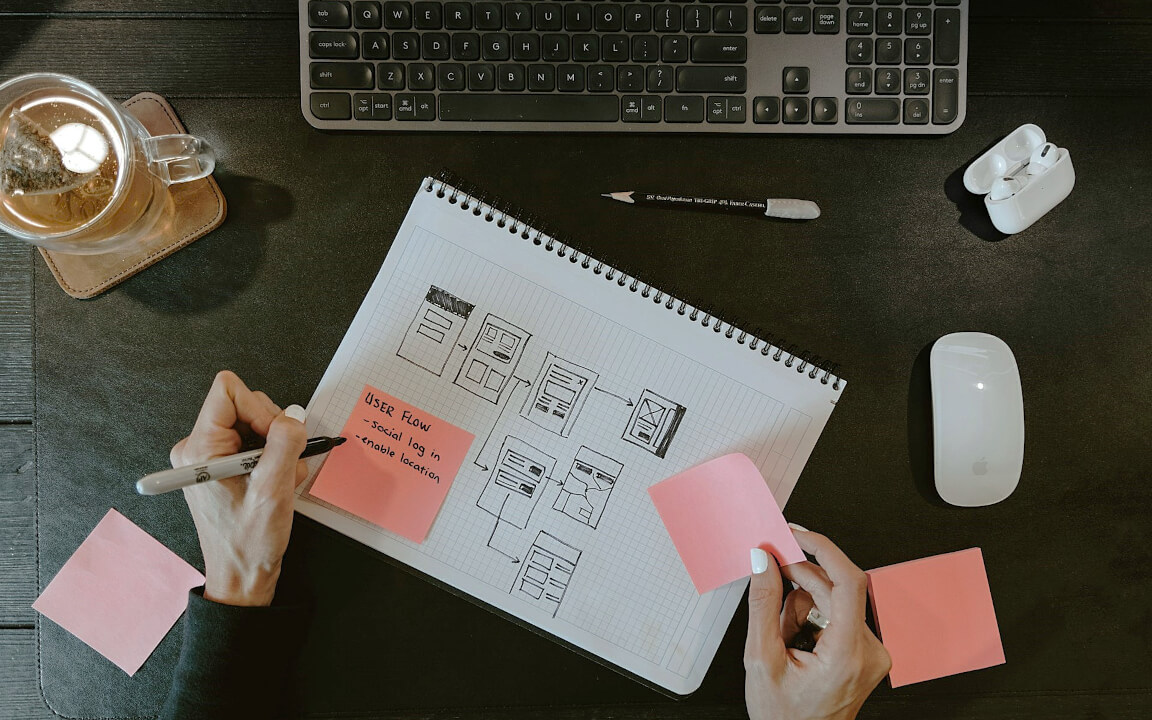
- Sketching & Wireframing: Creating basic layouts to define the structure and flow of screens.
- Mockups: Developing more detailed visual representations of the interface.
- Prototyping: Building interactive models that simulate the user experience, allowing for early testing and feedback. Tools like Figma, Adobe XD, and Sketch are instrumental here.
- Testing & Iteration: Prototypes are tested with real users to gather feedback on usability, identify pain points, and validate design decisions. This is a crucial iterative loop:
- Usability Testing: Observing users as they attempt to complete tasks with the prototype.
- A/B Testing: Comparing different design variations to see which performs better.
- Heuristic Evaluation: Assessing the interface against established usability principles. Feedback from testing informs further design refinements, leading to progressively better solutions. This iterative cycle of design, test, and refine is central to effective UX.
- Implementation & Launch: Once the design is validated, it's handed over to developers for implementation. UX designers often work closely with developers during this phase to ensure the final product accurately reflects the intended design and user experience.
- Post-Launch Evaluation & Continuous Improvement: UX design doesn't end at launch. Monitoring user behavior through analytics, gathering ongoing feedback, and conducting further testing allows for continuous improvement and optimization of the user experience over time.
UX Design as a Catalyst for Innovation
Innovation isn't just about a sudden flash of brilliance; it often stems from a deep understanding of unmet needs and a creative approach to solving existing problems. This is where UX design truly shines as a catalyst.
- Uncovering Unmet Needs: The rigorous user research inherent in UX design is a powerful tool for identifying pain points and frustrations that users may not even be able to articulate clearly. By observing user behavior and empathizing with their challenges, UX designers can pinpoint opportunities for innovation – creating solutions that genuinely make users' lives easier, more productive, or more enjoyable. For example, the rise of mobile banking apps was fueled by understanding users' frustration with limited banking hours and the desire for on-the-go access to their finances.
- Challenging Assumptions: UX encourages questioning an "it's always been done this way" mentality. By focusing on user goals rather than pre-existing processes, designers can reframe problems and explore novel solutions. This often leads to disruptive innovations that reshape industries. Airbnb, for instance, challenged the traditional hotel model by focusing on the user need for authentic, local travel experiences.
- Fostering a User-Centric Culture: When organizations embrace UX principles, they shift their focus from being product-centric or technology-centric to being user-centric. This cultural shift encourages all departments, from engineering to marketing, to consider the end-user in their decision-making processes, fostering a collaborative environment where innovative ideas rooted in user needs can flourish.
- Iterative Experimentation: The iterative nature of UX design, with its emphasis on prototyping and testing, allows for rapid experimentation and learning. This "fail fast, learn faster" approach de-risks innovation by enabling teams to quickly validate or discard ideas based on real user feedback, rather than investing heavily in unproven concepts.
- Designing for Future Needs: Proactive UX research can also anticipate future user needs and technological shifts. By understanding emerging trends and user aspirations, designers can create forward-thinking solutions that position businesses ahead of the curve. The development of voice user interfaces (VUIs) like Alexa and Google Assistant was driven by anticipating a need for more natural, hands-free interaction with technology.
The Unbreakable Link: UX Design and User Engagement
User engagement refers to the extent to which users are actively involved with, invested in, and derive value from a product or service. High engagement translates to increased loyalty, retention, advocacy, and ultimately, business success. Exceptional UX design is fundamental to achieving this.
- Effortless Usability: When a product is intuitive and easy to use, users can accomplish their goals without friction. This seamless experience reduces frustration and encourages continued interaction. Conversely, a clunky or confusing interface is a major barrier to engagement, leading to high bounce rates and app abandonment.
- Emotional Connection: UX design goes beyond mere functionality to tap into users' emotions. Thoughtful micro-interactions, aesthetically pleasing visuals, and a sense of delight can create positive emotional responses, fostering a stronger connection between the user and the product. Think of the satisfying "swoosh" sound when sending an email or the celebratory animation upon completing a task in a productivity app.
- Personalization and Relevance: Modern UX strives to deliver personalized experiences that cater to individual user needs and preferences. By leveraging data and understanding user context, products can offer relevant content, tailored recommendations, and customized interfaces, making the user feel understood and valued, thereby deepening engagement. Streaming services like Netflix excel at this by personalizing content recommendations.
- Clear Value Proposition: Good UX clearly communicates the value the product offers and helps users achieve their desired outcomes quickly. When users perceive tangible benefits and experience success, they are more likely to remain engaged.
- Building Trust and Credibility: A well-designed, reliable, and transparent user experience builds trust. Users are more likely to engage with products they perceive as credible and secure, especially when sharing personal information or making transactions.
- Accessibility and Inclusivity: Designing for accessibility ensures that people with diverse abilities can engage with a product. This not only expands the potential user base but also demonstrates a commitment to inclusivity, which can positively impact brand perception and user loyalty.
- Feedback and Control: Effective UX provides users with clear feedback on their actions and a sense of control over their experience. Knowing what's happening, why, and what to do next reduces uncertainty and empowers users, encouraging deeper exploration and engagement.
Measuring the Impact: UX Metrics That Matter
The impact of UX design isn't just anecdotal; it can be measured. Key metrics provide insights into user engagement and the overall effectiveness of the user experience:
- Task Success Rate: The percentage of users who successfully complete a defined task.
- Time on Task: The amount of time it takes users to complete a task.
- Error Rate: The number of errors users make while performing tasks.
- System Usability Scale (SUS): A standardized questionnaire for measuring perceived usability.
- Conversion Rates: The percentage of users who complete a desired action (e.g., sign-up, purchase).
- Net Promoter Score (NPS): Measures user loyalty and willingness to recommend the product.
- Customer Satisfaction (CSAT): Measures overall satisfaction with the product or specific interactions.
- Churn Rate: The percentage of users who stop using a product over a given period.
- Daily/Monthly Active Users (DAU/MAU): Measures the stickiness and engagement of a product.
The Evolving Landscape: Future Trends in UX Fueling Innovation
As technology continues its rapid evolution, so too does the field of UX design. Several trends are shaping its future and promising even greater potential for fueling innovation and engagement:
- AI-Powered UX: Artificial intelligence is enabling more personalized, predictive, and adaptive user experiences. AI can analyze user behavior to offer tailored content, automate tasks, and provide intelligent assistance, making interactions more efficient and engaging.
- Voice User Interfaces (VUIs) and Conversational AI: The rise of voice assistants and chatbots is demanding new approaches to UX design, focusing on natural language processing, conversational flow, and context awareness.
- Immersive Experiences (AR/VR/MR): Augmented reality, virtual reality, and mixed reality are opening up entirely new paradigms for user interaction, requiring designers to think beyond screens and create intuitive experiences in three-dimensional spaces.
- Ethical and Inclusive Design: There's a growing emphasis on designing responsibly, considering the ethical implications of technology, protecting user privacy, and ensuring inclusivity for all users, regardless of ability, background, or circumstance. This approach builds trust and fosters broader engagement.
- Data-Driven UX with a Human Touch: While data analytics provide invaluable insights, the future of UX lies in balancing quantitative data with qualitative human understanding. Empathy and ethical considerations will remain paramount in interpreting data and designing truly user-centered experiences.
- Sustainable UX: As environmental concerns grow, UX design will increasingly consider the sustainability of digital products, from energy consumption of devices to promoting mindful digital habits.
Conclusion: UX as the Cornerstone of Modern Success
In 2025, User Experience Design stands as an undeniable cornerstone of successful products, services, and businesses. It is the critical discipline that bridges the gap between human needs and technological capabilities. By prioritizing empathy, embracing iterative design, and focusing relentlessly on creating value for the user, organizations can leverage UX to not only meet existing demands but also to uncover latent needs and pioneer groundbreaking innovations.
The ability to deliver seamless, intuitive, and emotionally resonant experiences is what separates market leaders from the followers. In a world saturated with options, users gravitate towards products that understand them, empower them, and respect their time. As businesses continue to navigate the complexities of the digital age, investing in skilled UX talent and fostering a culture of user-centricity will be paramount. Ultimately, User Experience Design is more than just a process or a set of tools; it's a philosophy that, when embraced, unlocks profound levels of user engagement and paves the way for a future rich with meaningful innovation.