Legacy Modernization Services
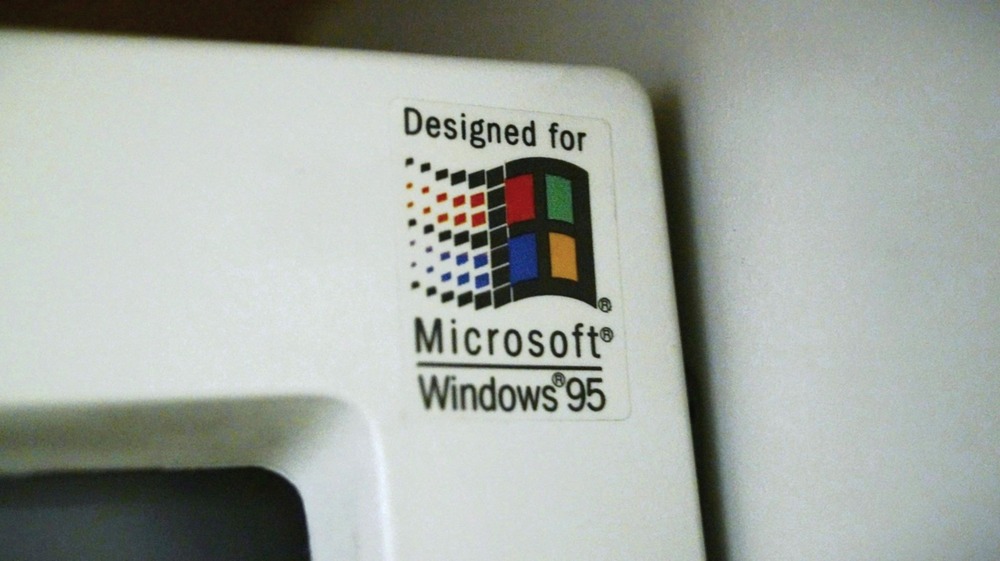
Is your critical business software starting to feel… well, old? Are you grappling with systems that are slow, costly to maintain, difficult to update, or holding you back from leveraging new technologies? You're not alone. In today's fast-paced digital world, relying on outdated technology isn't just inconvenient; it's a significant business risk. Welcome to Avori's Legacy Modernization Services, your pathway to revitalizing your core systems and unlocking future growth through strategic digital transformation.
We understand that your legacy applications are often the backbone of your operations, built over years and containing invaluable business logic. The thought of tampering with them can be daunting. But what if you could retain that core value while shedding the limitations? That's precisely what legacy modernization is all about. At Avori, we're not just developers; we're friendly, approachable experts dedicated to helping you navigate the complexities of software modernization. We partner with you to transform your aging software assets into agile, scalable, and secure platforms poised for the future. Let's explore how we can breathe new life into your technology.
What Exactly is Legacy Software Modernization? Demystifying the Buzzwords
You've likely heard terms like legacy modernization, application modernization, and software modernization. But what do they really mean? In simple terms, legacy software modernization is the process of updating or replacing outdated (legacy) IT systems, applications, and infrastructure. It's not just about applying a fresh coat of paint; it's about fundamentally improving the underlying technology, architecture, and functionality to better align with current and future business needs.
Legacy application modernization aims to address these issues, moving beyond simple maintenance to strategic enhancement. It's a key component of IT Modernization and broader Enterprise Modernization initiatives.
What makes software "legacy"? It's typically characterized by:
-
Outdated Technology
Relies on legacy programming languages, databases, or platforms that are poorly supported today, causing inefficiencies, high costs, and limited compatibility.
-
Difficulty in Maintenance
Maintaining legacy codebases is painfully slow, expensive, and risky due to tangled architecture, scarce documentation, and constant unplanned regression issues.
-
Integration Challenges
Legacy systems struggle to integrate with modern APIs, cloud platforms, or new applications, causing manual processes and inconsistent data flow.
-
Scalability Limits
Cannot efficiently scale to support growing user numbers or expanding data volumes, leading to significant performance bottlenecks and downtime risks.
-
Security Vulnerabilities
Lacks robust, up-to-date security measures and industry‑standard protocols, exposing critical systems to cyber threats, data breaches, and costly compliance violations.
-
Poor User Experience
Features outdated, unintuitive interfaces and sluggish responsiveness that frustrate users, hinder productivity, and fail to meet modern accessibility, usability standards.
-
Talent Scarcity
Very few developers possess deep expertise in obsolete technologies, making it difficult and expensive to hire and retain skilled personnel.
Why Modernize? The Compelling Case for Change and Digital Transformation
Continuing to rely on aging systems isn't just about dealing with occasional glitches. The "if it ain't broke, don't fix it" mentality can lead to significant, escalating problems:
-
Spiraling Maintenance Costs
Older systems drain IT budgets with constant upkeep; sourcing skilled maintenance staff for obsolete technologies is expensive and challenging.
-
Security Risks
Legacy software often contains unpatched vulnerabilities that expose organizations to data breaches, cyberattacks, and severe financial and reputational damage.
-
Reduced Agility & Innovation
Slow release cycles on outdated platforms hinder innovation, prevent rapid market adaptation, and impede feature launches essential for digital transformation.
-
Integration Nightmares
Connecting legacy systems with cloud services, AI, IoT, or mobile apps is complex, fragile, and costly, leading to data silos and workflow disruptions.
-
Poor Performance & User Experience
Slow response times and outdated interfaces frustrate employees and customers alike, reducing productivity, satisfaction, and ultimately harming brand loyalty.
-
Compliance Challenges
Inflexible, outdated systems struggle to comply with evolving regulations like GDPR and HIPAA, increasing the risk of fines, audits, and legal liabilities.
Modernizing legacy systems isn't just an IT project; it's a strategic business imperative. The benefits are substantial:
-
Reduced Costs
Minimizes maintenance expenses, optimizes infrastructure, accelerate development efficiency.
-
Enhanced Security
Modern platforms provide robust, up-to-date security protocols and threat protection mechanisms.
-
Increased Agility
Enables rapid development cycles, swift feature releases, and quick adaptation to market changes.
-
Performance & Scalability
Handles growing user loads and data volumes with efficient, much more reliable performance.
-
Better Integration
Seamlessly connects with modern APIs, cloud services, and third-party applications.
-
Superior User Experience
Offers intuitive, responsive user interfaces that significantly boost user satisfaction.
-
Attracting Talent
Attracts developers by offering modern tech stacks, job security and growth opportunities.
-
Future-Proofing
Creates a flexible foundation ready for emerging technologies and evolving business demands.
When is it Time for Application Modernization? Recognizing the Signs
How do you know when the tipping point has been reached? Deciding when to embark on legacy system modernization is crucial. It's not always about age; it's about fitness for purpose. Here are key indicators that it might be time:
-
Frequent Failures & Downtime
Frequent system crashes disrupt operations, causing lost productivity and undermining reliability.
-
Excessive Maintenance Costs
Maintaining outdated systems eats up IT budgets through constant fixes and staffing needs.
-
Inability to Add New Features
Implementing even minor feature changes remains slow, complex, and painfully expensive.
-
Integration Roadblocks
Legacy systems cannot integrate with modern tools, creating data silos and inefficiencies.
-
Security Concerns
Vulnerabilities in outdated software expose organizations to severe cyberattacks and data breaches.
-
Performance Bottlenecks
Systems slow significantly under heavy loads, degrading overall user experience and throughput.
-
Lack of Mobile/Web Access
Inaccessible or poorly optimized for mobile and web devices, limiting flexibility and usability.
-
Compliance Issues
Rigid legacy systems prevent meeting evolving regulatory standards, risking fines, legal actions.
-
Difficulty Finding Skilled Support
Scarcity of experts in obsolete technologies makes hiring support costly, slow processes.
-
Poor User Feedback
Negative user feedback highlights frustration with slow, unintuitive interfaces and limited functionality.
-
Business Strategy Shift
Legacy systems hinder new business models and strategic initiatives, blocking growth, innovation.
-
Data Silos & Insights Loss
Legacy systems trap data in silos, obstructing analytics and real-time informed decision-making.
While a major overhaul might not be needed annually, viewing software modernization as a continuous process rather than a one-off event is beneficial. Regular assessment and incremental improvements, including improving the design of existing code through techniques like software refactoring, can prevent systems from becoming critically outdated.
Avori's Approach: Our Structured Legacy Modernization Process
Embarking on a legacy modernization journey requires a clear plan and a trusted partner. At Avori, we've refined a collaborative, structured process to ensure your modernization project is successful, minimizes risk, and delivers maximum business value. Our legacy modernization services follow these key phases:
-
Discovery & Assessment
We collaborate with your team to analyze business goals, challenges, existing architecture, code quality, technical debt, dependencies, and operational workflows. Our gap analysis identifies performance bottlenecks, security risks, integration hurdles, and compliance gaps, prioritizing critical areas for improvement and guiding readiness for modernization.
-
Strategy & Roadmap Definition
Based on assessment insights, we partner with your leadership to define a tailored modernization strategy and roadmap. We evaluate options — Rehosting, Replatforming, Refactoring, Re‑architecting, or Rebuilding — assessing risks, costs, timelines, and benefits. The result is a prioritized action plan with clear milestones, success criteria, and stakeholder alignment.
-
Execution & Development
During execution, our expert teams implement the selected approach—Rehosting, Replatforming, etc.—using agile methodologies. We ensure iterative progress, continuous integration, regular stakeholder feedback, code modernization best practices, and communication to deliver scalable, maintainable solutions that align precisely with your evolving business objectives.
-
Rigorous Testing
Rigorous testing validates the modernized system across unit, integration, performance, load‑testing, security, regression, fault‑injection, and user acceptance tests. We develop robust test plans, automate suites, simulate real‑world workloads, and perform threat assessments. Ensuring functionality, optimal performance, security compliance, and user satisfaction.
-
Deployment & Transition
We plan and execute a phased deployment and transition strategy to minimize business disruption. This includes parallel runs, rollback plans, stakeholder training. We coordinate cutovers, monitor system health, and provide immediate support. Documentation and knowledge transfer ensure operational continuity and accelerate adoption of the modernized platform.
-
Ongoing Support & Evolution
We provide ongoing support, maintenance, and continuous improvement services to ensure your modernized system remains secure, performant, and aligned with business goals. We monitor system health, apply updates, address incidents, and plan future enhancements. Performance reviews and strategic planning help evolve the platform to meet emerging requirements.
Throughout this process, communication and collaboration are key. We see ourselves as an extension of your team, working transparently towards shared goals.
Exploring the Paths: Key Legacy Modernization Strategies & Practices
Application modernization isn't a single technique; it's a spectrum of strategies. Choosing the right path depends on your specific system, business goals, budget, and risk tolerance. Avori has expertise across all major approaches, often referred to by variations of the "Rs" of modernization:
-
Rehosting (Lift and Shift)
Rehosting transfers your application from on‑premises servers to modern cloud infrastructure with minimal code changes. This rapid lift‑and‑shift minimizes upfront costs and risks, accelerates migration and reduces immediate operational overhead, but merely relocates workloads without optimizing architecture or leveraging cloud‑native services, leaving inefficiencies and stability gaps.
Pros: Fast lift‑and‑shift migration with minimal changes and reduced initial risk.
Cons: Doesn’t leverage cloud‑native features and leaves inefficiencies unresolved.
-
Replatforming (Lift and Reshape)
Replatforming migrates your application to the cloud while applying targeted adjustments—such as adopting managed databases or container orchestration—to harness platform efficiencies. It balances speed and cost, unlocking initial cloud benefits, yet preserves core architectural constraints and limits deep transformation and long‑term agility.
Pros: Balances migration speed and cost while unlocking initial cloud efficiencies.
Cons: Retains core architectural constraints, hindering deep transformation and agility.
-
Refactoring / Code Refactoring
Refactoring restructures existing codebases to improve readability, modularity, and maintainability without altering external behavior. By eliminating technical debt, reducing complexity, and enforcing best practices, it enhances performance and developer productivity, establishing a cleaner, more extensible foundation for future enhancements and robust modernization efforts.
Pros: Enhances code quality, maintainability, and performance without full rewrite.
Cons: Doesn’t modify core features or architecture, limiting modernization impact.
-
Re-architecting
Re‑architecting reinvents your application’s structural design—often decomposing monoliths into microservices or serverless components—and integrates containerization and event‑driven patterns. This overhaul unlocks cloud‑native scalability, resilience, and independent deployments, but demands substantial planning, development effort, and organizational alignment to succeed effectively.
Pros: Delivers scalable, resilient, independently deployable services efficiently.
Cons: Requires greater complexity and resource investment than basic lift‑and‑shift.
-
Rebuilding (Rewrite / Code Modernization)
Rebuilding rewrites the entire application using modern languages, frameworks, and architectures while preserving existing specifications. This approach eradicates technical debt, fully exploits cloud‑native capabilities, and produces a fresh, extensible codebase, yet incurs the highest cost, longest timeline, and greatest implementation risk of all strategies.
Pros: Eliminates technical debt and enables full cloud‑native capability utilization.
Cons: Carries highest cost, longest timeline, and greatest risk of failure.
-
Replace (Rip and Replace)
Replace discards your legacy system in favor of a COTS solution, SaaS product, or custom‑built alternative, supplemented by change management plans. This strategy rapidly delivers modern features, vendor support, and scalability, but may necessitate extensive process reengineering, sacrifice bespoke functionality, and introduce potential vendor lock‑in challenges.
Pros: Rapidly delivers modern features and scalability through COTS or SaaS.
Cons: May require process changes, lose custom features, introducing vendor lock‑in.
Avori, as your application modernization company, will help you analyze these options and select the most effective strategy (or combination of strategies) for your legacy application modernisation. We utilize the best application modernization software and tools throughout the process.
The Avori Advantage: Your Expert Partner in Legacy Transformation
Choosing the right partner for your legacy transformation is critical. Why trust Avori with your essential systems?
-
Deep Expertise
Modernization specialists with cross-industry expertise. We master legacy systems, architectures, and emerging technologies, ensuring nuanced solutions for complex software evolution challenges.
-
Tailored Solutions
Custom modernization strategies rooted in your business goals. We analyze workflows, pain points, and growth targets to design value-driven, scalable transformations—no generic templates.
-
Focus on Business Outcomes
Tech-enabled results: cost reduction, revenue growth, risk mitigation, and competitive agility. We align modernization with measurable KPIs, prioritizing ROI over technical novelty.
-
Technology Agnostic
Unbiased technology recommendations (cloud, frameworks, databases) tailored to your needs. We prioritize long-term scalability and efficiency, not vendor preferences—future-proofed solutions over trends.
-
Collaborative Partnership
Transparent collaboration at every stage. Shared ownership through iterative feedback, joint decision-making, and adaptable workflows. Your success metrics become our milestones.
-
Full Spectrum Services
End-to-end modernization: assessment, cloud migration, refactoring, rehosting, and post-launch support. We modernize legacy systems holistically with proven methodologies and security-first execution.
We are committed to making your legacy app modernization journey a smooth and successful one, turning your legacy liabilities into modern assets.
Ready to Embrace Digital Transformation?
Imagine a future where your core systems are agile, scalable, secure, and actively supporting your growth and innovation goals. That future is achievable with the right approach and the right partner. Let Avori guide you through your IT Modernization process, transforming your technology landscape and empowering your digital transformation.
Let’s start your modernization journey.
Take the first step towards a modernized future. Contact Avori today for a no-obligation consultation. Let's discuss your challenges and explore how our legacy modernization services can help you.