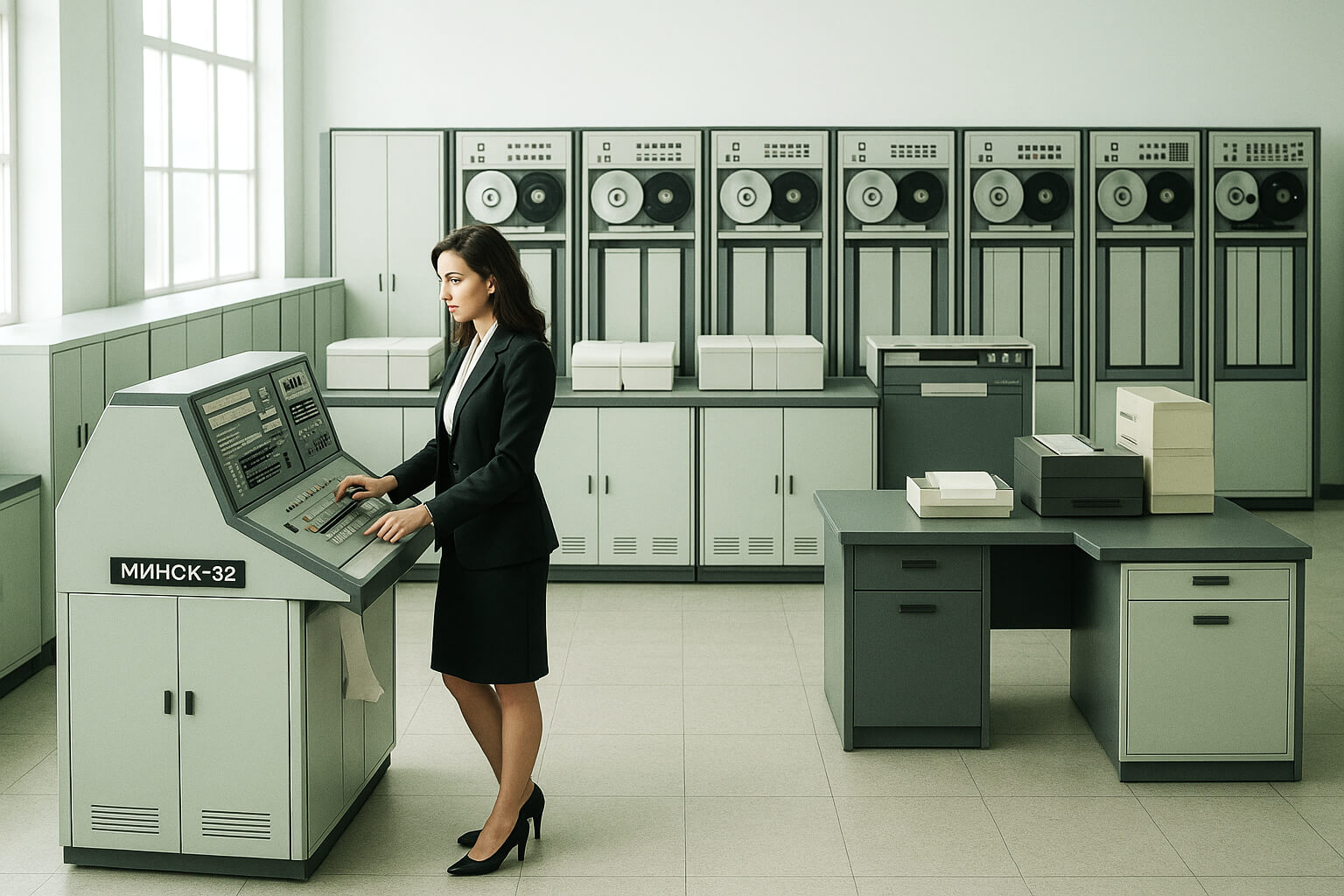
In the grand narrative of the 20th century's technological race, the contributions of individual Soviet republics often meld into the monolithic achievements of the USSR. Yet, beneath this vast umbrella, certain regions pulsed with specialized innovative fervor. Among these, the Byelorussian Soviet Socialist Republic (BSSR), present-day Belarus, carved out a unique and pivotal role in the digital revolution that swept through the Soviet Union. Far from being a mere peripheral player, Belarus emerged as a veritable "Soviet Silicon Valley," a central hub for the design, development, and mass production of cutting-edge computer hardware and the foundational software that powered them. This deep-rooted legacy of technical excellence and systemic innovation not only defined its crucial contribution to Soviet technological ambitions but also laid the critical groundwork for Belarus's globally recognized IT prowess today.
The Dawn of Soviet Computing in Belarus: Forging a Digital Future
The post-World War II era saw the Soviet Union place immense strategic emphasis on scientific and technological advancement, viewing it as critical for economic development, military parity, and ideological assertion. Within this national agenda, Minsk, the capital of Belarus, was rapidly identified as a key center for the burgeoning field of electronic computing. This wasn't accidental; the republic had a strong tradition in technical education and a rapidly industrializing base.
The late 1950s marked the genesis of Belarus's IT journey. In 1958, a landmark decision led to the establishment of a Special Design Bureau (SKB) at the Minsk Ordzhonikidze Plant, an existing facility repurposed for this new technological frontier. This plant would soon be renamed the Minsk Plant of Computing Machines (MZVM) and later evolve into the Minsk Production Group for Computing Machinery (MPOVT). The SKB itself was unbundled in 1964 to become the autonomous Scientific Research Institute of Electronic Computers (NIIEVM). These two institutions, MPOVT for production and NIIEVM for research and development, would form the symbiotic core of Belarusian IT innovation for decades.
The initial impetus was clear: the Soviet economy, its vast industrial complexes, sprawling scientific research projects, and formidable military apparatus all presented an insatiable demand for computational power. Early Belarusian efforts were thus channeled towards creating machines that could tackle complex calculations, streamline planning processes, and automate industrial controls, addressing the critical needs of a superpower.
Hardware Ascendancy: The "Minsk" Dynasty and the ES EVM Juggernaut
Belarus's most iconic contribution to early Soviet computing was undoubtedly the "Minsk" family of computers. These indigenously designed machines became workhorses across the USSR, testament to the ingenuity of Belarusian engineers.
The dynasty began with the Minsk-1, the first proprietary computer developed at the SKB and rolling off the production line at MZVM in 1960. Spearheaded by Chief Designer Georgy Pavlovich Lopato, the Minsk-1 was a first-generation, vacuum tube-based machine. While modest by today's standards, with a speed of around 2,500-3,000 operations per second and a ferrite core memory for 1024 31-bit words, it was a significant achievement. It featured peripheral memory on magnetic tape and punched tape input. Crucially, it was supplied with a library of programs and early auto-programming systems – the "Autocode Inzhener" (Engineer's Autocode) and "Autocode Economist" – simplifying its use for technical and economic calculations. Around 230 Minsk-1 units and its variants (Minsk-11, Minsk-12, Minsk-14, Minsk-16 tailored for specific tasks like seismic data processing) were produced until 1964, making it a widely adopted machine in the early Soviet digital landscape.
The true breakthrough came with the second generation. The Minsk-2, developed between 1960 and 1962 under the guidance of Viktor Yakovlevich Simkhes (who also designed the Minsk-12), was the USSR's first widely used semiconductor (transistor-based) computer. This leap in technology brought increased reliability, reduced size, and a performance boost to 5,000-6,000 operations per second. A pivotal feature of the Minsk-2 was its ability to process textual information, a novelty for Soviet computers at the time. Its successor, the Minsk-22, became the most common model in this line, with 734 units produced. These machines found applications in diverse fields, from factory automation to scientific research.
Furthering the lineage, the Minsk-23, designed in the mid-1960s, introduced magnetic tape storage compatible with Western drives and was equipped with an early domestically developed operating system known as "Dispatcher." It was famously used for pioneering projects like the Aeroflot air ticket sales and reservation system. However, its commercial success was somewhat limited.
The pinnacle of the Minsk series was the Minsk-32, which entered production in 1968. This machine absorbed the best features of its predecessors and significantly ramped up performance to around 30,000-35,000 operations per second. A key innovation was its software compatibility with earlier Minsk models, a forward-thinking approach that preserved user investment in programming. The Minsk-32 became the most widespread mainframe in the Soviet Union during its heyday; at one point in 1970, Minsk-family computers constituted over 70% of the entire Soviet domestic computer fleet, underscoring Minsk's dominance in mainframe manufacturing. In total, nearly 4,000 Minsk-series computers were manufactured between 1960 and 1975.
While the Minsk series represented original Soviet design, the late 1960s saw a strategic, albeit controversial, shift across the Eastern Bloc: the ES EVM (Edinaya Sistema Elektronnykh Vychislitel'nykh Mashin – Unified System of Electronic Computers) project, also known as Ryad. This ambitious undertaking aimed to create a series of mainframes that were software-compatible with IBM's popular System/360 and later System/370 architectures. This decision, while intended to leverage proven designs and rapidly modernize Soviet computing, also meant a move towards reverse-engineering and cloning, arguably stifling some indigenous innovation paths.
Belarus, with its established expertise, became a linchpin in the ES EVM program. NIIEVM and MPOVT in Minsk were tasked with developing and manufacturing several key models. Belarusian factories produced a significant portion of these mainframes, including the widely deployed ES-1020, ES-1022, ES-1035, ES-1036, ES-1060, ES-1061, and ES-1066. These machines formed the backbone of computing infrastructure in the USSR and other Comecon countries for many years, handling complex tasks in planning, statistics, defense, and research. Over 15,000 ES EVM mainframes were produced in total across the participating countries, with Minsk being a primary contributor.
As the personal computer revolution dawned globally in the 1980s, Belarus again played a crucial role with the ES PEVM (ES Personal EVM) series. NIIEVM developed influential IBM PC clones such as the ES-1840 (IBM PC XT clone), ES-1841 (an improved XT clone and the most mass-produced Soviet PC with over 83,000 units), ES-1842 (IBM PC AT clone), and the later ES-1863. These machines were vital for introducing personal computing to Soviet enterprises, educational institutions, and scientific bodies. They typically ran AlphaDOS, a Russified version of MS-DOS, making them more accessible to Russian-speaking users. While not always 100% compatible and often relying on Soviet-made components that mirrored Western designs (like the K1810VM86 processor, an Intel 8086 analog), these Belarusian-made PCs marked a critical step in democratizing computing power.
Software and Systems: The Unseen Engine
The hardware achievements of Belarus were inextricably linked to parallel advancements in software and systems programming. Indeed, it is reported by Belarusian IT veterans like Mark Nemenman that the very Russian term "программное обеспечение" (programmnoe obespechenie – software, or literally "programmatic provision") was first coined in Minsk in the early 1960s, highlighting the region's foundational thinking in this domain.
Early software development was pragmatic and closely tied to the capabilities of the Minsk computers. For the Minsk-1, engineers at the SKB developed not just libraries of standard mathematical and engineering programs but also the "Autocode Inzhener" and "Autocode Economist." These were early high-level programming languages, akin to assemblers with macro capabilities or very early compilers, designed to make programming more accessible to engineers and economists who were not specialist programmers.
As hardware evolved, so did the software. The Minsk-2 and Minsk-22 saw the development of more sophisticated programming tools, including compilers for widely recognized international languages like ALGOL 60 and COBOL. The Minsk-23, with its magnetic tape storage, required a more complex software environment, leading to the creation of the "Dispatcher" operating system, one of the first comprehensive OS developed in Belarus. The Minsk-32 also had its own sophisticated OS and assembler.
With the advent of the ES EVM project, Belarusian software engineers faced a new, immense challenge: ensuring compatibility with IBM operating systems and software. This often involved the painstaking process of studying, understanding, and adapting IBM's system programs. Belarusian specialists became adept at this complex reverse-engineering, leading to the creation of Soviet analogs like DOS/ES (Disk Operating System for ES EVM) and OS/ES (Operating System for ES EVM), as well as various compilers and application packages. While this reliance on IBM architecture limited purely original OS development, it cultivated deep expertise in system internals, debugging, and adaptation – skills that would prove invaluable later.
Beyond operating systems and compilers, Belarusian programmers developed a wide array of application software, though specific "hit" products are less documented than the hardware. This software catered to the needs of Soviet industry (e.g., process control systems for factories), scientific research institutions (data analysis, modeling), economic planning bodies (database management, statistical analysis), and, significantly, the military-industrial complex (specialized algorithms, command and control systems).
The Human Factor: Education and Engineering Prowess
The engine driving Belarusian IT innovation was its highly skilled workforce. The Byelorussian SSR, like the rest of the Soviet Union, placed a strong emphasis on science, technology, engineering, and mathematics (STEM) education. This created a fertile ground for cultivating the talent needed for the burgeoning computer industry.
Central to this educational effort was the Minsk Radioengineering Institute (MREI), founded in 1964 and now known as the Belarusian State University of Informatics and Radioelectronics (BSUIR). MREI rapidly became one of the leading institutions in the USSR for training specialists in computer engineering, radioelectronics, automation, and programming. Its curriculum was rigorous, deeply theoretical, yet also closely aligned with the practical needs of the research institutes and factories like NIIEVM and MPOVT. Many graduates found their way directly into these flagship enterprises, creating a tight feedback loop between education and industry. The Belarusian State University (BSU) also contributed significantly, particularly through its faculties of applied mathematics and physics.
This system produced a cadre of talented engineers and scientists. Figures like Georgy P. Lopato (Chief Designer of Minsk-1 and later Director of NIIEVM), Viktor Ya. Simkhes (Chief Designer of Minsk-2, Minsk-22, Minsk-12), and Mark Nemenman (a pioneer in early Minsk software development) were among the leading minds. But beyond these prominent names, thousands of highly competent engineers, programmers, technicians, and assemblers formed the backbone of the industry. There was a palpable culture of innovation, intense problem-solving, and dedication within the walls of NIIEVM and the factory floors of MPOVT, driven by both national strategic goals and genuine scientific curiosity.
Navigating the Challenges: Innovation Under Constraints
Despite its significant achievements, the Belarusian IT sector operated within a challenging environment characterized by the Cold War and the inherent limitations of the Soviet centrally planned economy.
The decision to pivot towards cloning IBM architecture with the ES EVM series, while providing a shortcut to modern computing paradigms, had the side effect of dampening purely original mainframe design trajectories that had begun with the Minsk series. While engineers gained invaluable experience in understanding and replicating complex systems, the scope for radical, homegrown innovation in computer architecture became more constrained.
The Iron Curtain and Western COCOM (Coordinating Committee for Multilateral Export Controls) embargoes severely restricted access to cutting-edge Western technology and components. This necessitated a heavy reliance on reverse-engineering, which, while showcasing Soviet technical skill, often meant playing catch-up and expending significant resources on recreating what was already available elsewhere. The technological lag, though not always vast, was a persistent issue.
Resource allocation within the Soviet command economy could also be problematic. While the IT sector, particularly its defense-related aspects, was often prioritized, competition for resources, bureaucratic hurdles, and supply chain inefficiencies could hinder development and production timelines. Nevertheless, the sheer volume of computers produced in Minsk testifies to a high degree of prioritization and organizational capability. The intensive effort of adapting foreign software and developing domestic alternatives in an environment of limited information exchange also speaks to the resilience and ingenuity of Belarusian specialists.
The Soviet Legacy: Foundation for Modern Belarusian IT
The collapse of the Soviet Union in 1991 brought profound economic and structural changes to Belarus. The large, state-controlled IT enterprises faced an uncertain future as their traditional markets and centrally directed projects dissolved. However, the decades of investment in IT infrastructure, research, and, most importantly, human capital, were not lost. This Soviet legacy became the bedrock upon which Belarus built its globally recognized modern IT sector.
The strong educational system, particularly institutions like BSUIR, continued to produce highly skilled engineers and programmers. The deep-seated knowledge in mathematics, physics, and engineering, a hallmark of Soviet technical education, provided a robust foundation for tackling complex software development tasks. The engineers and scientists who had cut their teeth on Minsk mainframes, ES EVM systems, and complex software projects possessed a wealth of experience and a problem-solving mindset.
While some talent emigrated in the turbulent 1990s (a "brain drain"), a substantial pool remained. These individuals played a crucial role in the transition from state-led industry to a new ecosystem of private IT companies. Many of the first successful Belarusian software outsourcing firms and product companies were founded or staffed by people with roots in the Soviet IT system. They understood complex systems, valued engineering rigor, and were adept at working within constraints – qualities that resonated with international clients.
The establishment of the Belarus Hi-Tech Park (HTP) in 2005 was a pivotal moment, creating a favorable tax and legal environment that catalyzed the growth of the IT sector. The HTP effectively leveraged the existing human capital and engineering culture. Globally renowned companies like EPAM Systems (co-founded by Arkadiy Dobkin, a graduate of BSU's Applied Mathematics faculty) and Wargaming (creator of "World of Tanks," founded by Victor Kislyi, a physics graduate from BSU) are iconic examples of this new wave. While their business models and global reach are distinctly post-Soviet, their founders and many early employees were products of the Belarusian educational and technical environment shaped during the Soviet era. The inherited tradition of engineering excellence and a strong emphasis on technical skills provided a competitive advantage.
An Enduring Imprint
Belarus's role as a cradle of Soviet IT innovation is a crucial, though often underappreciated, chapter in the history of computing. From the pioneering Minsk-1 to the mass-produced ES EVM mainframes and personal computers, and the foundational software that brought them to life, Belarusian engineers and scientists made indispensable contributions to the USSR's technological landscape. The challenges were immense, but the achievements were substantial, cultivating a deep reservoir of technical expertise and an enduring culture of engineering.
This Soviet-era experience was not merely a historical footnote; it was a direct progenitor of the nation's 21st-century identity as a significant player in the global IT industry. The educational institutions, the accumulated knowledge, and the engineering mindset forged in Minsk's research labs and factories during the Soviet period have left an indelible imprint, demonstrating a remarkable continuity of innovation that continues to shape Belarus's technological destiny.